
What Should Businesses Do With Hazardous Waste Before Year-End?
The end of the year has a way of exposing everything a facility has been putting off. Old containers sitting in a storage area, leftover materials from completed projects, waste that was never properly identified, and containers that have slowly accumulated over the year can all become part of a year-end cleanup. When hazardous waste is involved, however, a facility cleanout is more than a matter of making room.
A year-end review is a good opportunity to take stock of what your business has accumulated, confirm that waste streams are properly identified, check how materials are being stored, and arrange disposal for waste that should no longer remain on site. Taking care of these steps before the calendar turns can also make the first few months of the new year much easier to manage.
Start With an Inventory Instead of Moving Everything at Once
The first step in a hazardous waste cleanup should be knowing what you actually have.
Walk through the areas where hazardous materials and waste are stored and make a list of the containers, materials, and waste streams present. This is particularly important after a busy production period, facility maintenance project, renovation, equipment replacement, or other activity that may have generated more waste than usual.
Do not assume that materials that look similar can automatically be handled the same way. Different characteristics can affect how a waste stream needs to be stored, packaged, documented, and prepared for disposal.
For example, a business finishing a painting project may have accumulated leftover coatings, solvents, contaminated materials, or other related waste. Arranging Paint Waste Disposal Indianapolis may be one part of that cleanup, but the first step is still identifying exactly what materials are present and how they have been stored.
The same principle applies to facilities that generate specialized waste. Pharmaceutical materials, for example, can involve different considerations depending on what the material is, where it came from, and how it has been characterized. A year-end inventory gives businesses a chance to identify those materials rather than allowing unidentified containers to remain in storage.
Separate Waste Streams Before Preparing Them for Disposal
One of the biggest mistakes during a facility cleanout is treating the process like an ordinary trash removal project.
When employees are under pressure to clear space before the end of the year, there can be a temptation to consolidate containers simply because the materials appear similar. That approach can create compatibility issues and make the waste more difficult to manage.
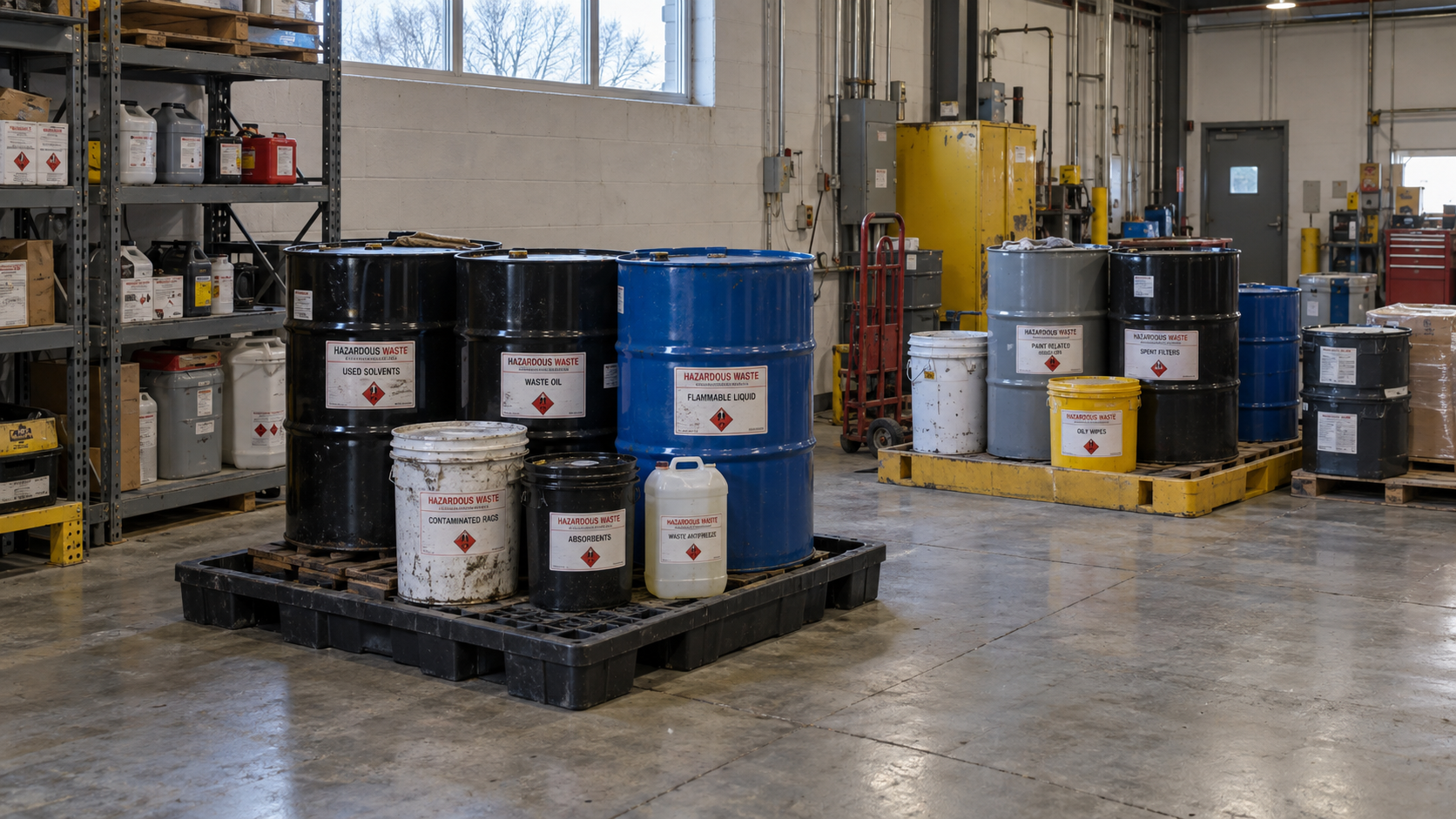
Hazardous waste should be kept separated according to its characteristics and applicable handling requirements. Containers should be appropriate for the materials they hold, and employees should know what each container contains before anything is moved or consolidated.
This is especially important when a facility has accumulated waste from several departments or projects. A maintenance area might contain chemical residues while another part of the facility has old equipment, contaminated materials, or process-related waste. These should not automatically be treated as one waste stream simply because they are being removed at the same time.
The goal of a year-end cleanup is not just to get waste off the floor. It is to make sure the materials are properly identified and prepared for the next stage of handling.
Take a Closer Look at Old Equipment and Materials
Year-end cleanouts often uncover materials that have been sitting around because nobody was quite sure what to do with them.
Old electrical equipment is a good example. When equipment is removed from service, businesses may need to determine what it contains, whether it has been drained or otherwise prepared, and what requirements apply to its handling. A transformer that has been sitting in a corner for months should not simply be treated as ordinary scrap without first understanding its condition and contents.
That is where a service such as Transformer Disposal Houston may become relevant for a facility working through retired electrical equipment. The disposal process should begin with identifying the equipment and determining the appropriate handling requirements rather than assuming that all old transformers can follow the same path.
The same caution applies to unusual waste streams generated during maintenance, manufacturing, transportation, or industrial operations. If employees cannot confidently identify a material, that uncertainty should be addressed before the material is moved or combined with something else.
Review Containers Before the Weather Gets Worse
Winter can make facility operations more difficult, particularly when waste is stored in areas exposed to changing temperatures, precipitation, or difficult access conditions.
Before the end of the year, inspect containers for signs of damage, deterioration, leaks, corrosion, or other conditions that could affect safe storage. Check that labels remain readable and that employees can still identify the contents without relying on memory.
Corrosive materials deserve particular attention because the material itself can affect containers and surrounding equipment. If your facility has accumulated liquids with corrosive characteristics, planning Corrosive Liquid Disposal Detroit should start with confirming what the material is, how it is contained, and whether the current storage arrangement remains appropriate.
A year-end inspection is also a good opportunity to look at the storage area itself. Keep incompatible materials appropriately separated, maintain access to containers, and make sure employees are not having to work around unnecessary clutter just to reach a waste container.
Do Not Forget Specialized Waste
Not every hazardous waste stream comes from an obvious industrial process.
Businesses can accumulate specialized materials through vehicle maintenance, manufacturing, healthcare-related operations, research, equipment servicing, and other activities. Some of these materials may require specialized handling because of their physical properties, chemical characteristics, or regulatory status.
Airbags are one example. Facilities handling vehicles or automotive components may eventually need to address airbags and related materials that cannot simply be placed into a normal waste container. Airbag Disposal should be approached based on the condition and characteristics of the material and the applicable requirements for its handling.
The important lesson during a year-end cleanup is not to overlook unusual materials simply because they occur in smaller quantities. A single container or piece of equipment can still require careful identification and appropriate preparation.
Review Documentation While You Still Have Time
A physical cleanup is only part of year-end waste management.
Businesses should also review the records associated with their hazardous waste. Make sure waste descriptions, quantities, container information, and other required documentation are accurate and consistent with the materials actually present.
This is much easier to do while the waste is still organized and identifiable. Waiting until a container has been sitting in storage for months can make it harder to determine exactly when it was generated, what process produced it, or what material it contains.
Year-end is also a useful time to review internal procedures. Were employees clear about where different waste streams belonged? Were containers labeled consistently? Did any department create waste that was not included in the normal disposal process? Did temporary storage areas become permanent simply because nobody revisited them?
These questions can reveal process problems that are much easier to correct before the new year begins.
Pay Attention When Waste Has More Than One Regulatory Consideration
Some waste streams require particularly careful evaluation because more than one regulatory framework may apply.
For example, materials that involve both hazardous and radioactive characteristics should not be approached as ordinary hazardous waste simply because the chemical component is familiar. A facility dealing with Hazardous and Radioactive Waste Disposal Chicago may need to consider the characteristics of the waste, the radioactive component, applicable requirements, and the appropriate specialized handling pathway.
This is another reason why year-end inventory work should happen before disposal arrangements are made. Identifying the material first allows the disposal process to be based on what the waste actually is rather than on assumptions made from its appearance or origin.
When specialized waste is involved, employees should not improvise a disposal method simply because the material has been stored for a long time. The safest approach is to identify the waste and obtain appropriate guidance before moving forward.
Do Not Mix a Cleanout With a Disposal Shortcut
A large year-end cleanup can create a false sense of urgency. Facilities may have projects closing, storage areas that need to be cleared, and management teams looking for everything to be finished before the holidays.
That does not mean hazardous waste should be rushed through the process.
Do not pour materials together just to reduce the number of containers. Do not place unknown materials into a container because it seems like the closest match. Do not remove labels simply because a container is being prepared for pickup. And do not assume that an old material is no longer regulated because it has been sitting untouched for several months.
A well-organized cleanup may actually take a little longer at the beginning because employees are identifying and separating materials correctly. That extra attention can prevent problems later.
Build the New Year Around What You Learn
A year-end hazardous waste review can do more than clear out old containers. It can show a business where its waste management process needs improvement.
If one department repeatedly produces unidentified waste, employee training may need to be improved. If containers are regularly stored longer than expected, pickup scheduling may need to change. If several incompatible materials ended up in the same storage area, the facility may need clearer segregation procedures.
Look at the cleanup as an opportunity to improve the system rather than simply finishing a one-time task.
The goal is to enter the new year with waste streams that are identified, storage areas that are organized, documentation that is up to date, and a clear understanding of what still needs to be handled.
A Better Year-End Starts With Knowing What You Have
Hazardous waste should not become an afterthought during the final weeks of the year. A careful review of accumulated materials, containers, storage areas, documentation, and specialized waste streams can make the disposal process more organized and help prevent avoidable problems.
Start early enough to identify anything unusual, separate incompatible materials, address questionable containers, and determine what requires specialized handling. If your facility has accumulated hazardous waste that needs to be evaluated or prepared for disposal, contact a qualified hazardous waste management provider before the year-end rush begins.
Taking care of the waste now means your team can start the new year with a cleaner, more organized facility and a clearer process for managing what comes next.