
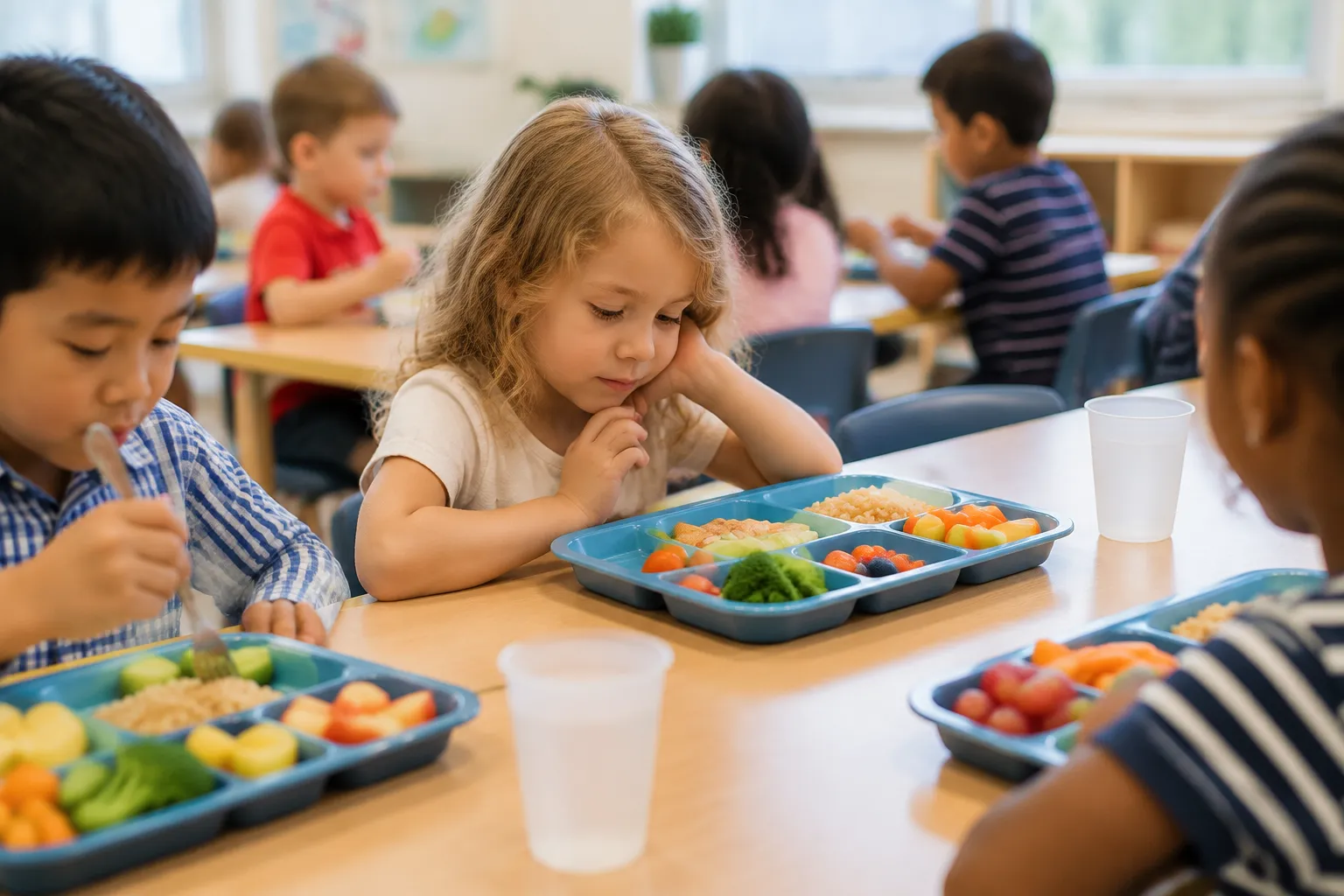
Feeding children is rarely as simple as putting a nutritious meal on a plate and expecting everyone to finish it.
Some children will happily try almost anything. Others may refuse foods because of their color, texture, smell, temperature, shape, or even the way the food is arranged on the plate. One child may eat carrots at home but refuse them at school. Another may accept a food one week and reject it completely the next.
For schools, preschools, daycare centers, and other childcare programs, picky eating creates a unique challenge. The goal is not simply to serve nutritious food. Children also need to be willing to eat it.
This is why successful children’s meal programs require a balance between nutrition, familiarity, variety, presentation, and flexibility.
Professional school catering services Chicago providers can help schools create menus that are designed around the realities of feeding large groups of children. Instead of expecting every student to enjoy the same foods, effective menu planning considers age, developmental stage, food preferences, texture, appearance, and dietary requirements.
The same principles apply to younger children. For childcare providers working with toddlers and preschoolers, meals often need to be simple enough to recognize while still introducing children to new flavors and ingredients.
The challenge is finding the balance between giving children foods they already know and helping them gradually become comfortable with something new.
What Is Picky Eating?
Picky eating is a broad term used to describe children who have a limited range of accepted foods or who frequently refuse unfamiliar foods.
It can look different from one child to another.
A picky eater may:
-
Eat only a small selection of foods
-
Refuse foods based on color
-
Reject foods with certain textures
-
Avoid mixed dishes
-
Prefer foods to be separated on the plate
-
Refuse foods with strong smells
-
Become uncomfortable when presented with unfamiliar ingredients
-
Eat the same meal repeatedly
-
Suddenly reject a food they previously enjoyed
Some children may be highly selective, while others simply have strong preferences.
The distinction is important because not every child who refuses broccoli has a serious feeding issue.
For many children, picky eating is part of normal development.
Children are learning about food at the same time they are learning about independence. Saying “no” to a meal can sometimes be about more than the food itself. It can also be a way for a child to exercise control.
In group settings, this can become particularly noticeable.
A child may see another student refuse a food and immediately decide that they do not want it either.
This means that the environment surrounding a meal can influence eating behavior just as much as the food itself.
Why Children Become Picky Eaters
There is no single reason why children become selective eaters.
Food preferences can be influenced by many factors, including age, development, previous experiences, sensory sensitivity, family habits, and exposure to different foods.
Familiarity Plays a Major Role
Children often feel more comfortable with foods they already recognize.
A familiar food provides predictability.
A new food introduces uncertainty.
This is why a child may happily eat a plain piece of chicken but reject a casserole containing chicken, vegetables, and sauce—even though the ingredients are individually familiar.
The way food is combined can change the child’s perception of it.
For catering teams, this is an important lesson.
A nutritious menu does not always need to be complicated.
Sometimes, simple meals with recognizable components are more successful than elaborate dishes.
The Role of Food Neophobia
Many young children experience what is sometimes called food neophobia—the reluctance to try unfamiliar foods.
This can be especially noticeable during the toddler and preschool years.
A child may look at a new food and immediately decide that they do not like it without ever tasting it.
The solution is rarely to pressure the child.
Instead, repeated, low-pressure exposure can help children become more comfortable with unfamiliar foods over time.
A school or childcare meal program can support this by regularly introducing new foods alongside familiar favorites.
For example, instead of serving an entirely unfamiliar meal, a program might offer:
-
A familiar grain with a new vegetable
-
A known protein with a new sauce served separately
-
A familiar fruit alongside a new fruit
-
A preferred side dish with a new main course
This creates a bridge between what the child already knows and what they are being encouraged to explore.
Why Forcing Children to Eat Can Backfire
One of the biggest mistakes adults can make is turning food into a battle.
Telling a child they cannot leave the table until they finish their vegetables may create negative associations with mealtimes.
Likewise, forcing a child to taste something can make them more resistant to that food in the future.
In a school or childcare setting, staff should focus on creating positive opportunities rather than forcing outcomes.
The goal is to expose children to nutritious foods without making every meal a confrontation.
This can be especially important when working with children who have sensory sensitivities or particularly strong reactions to unfamiliar foods.
The Psychology of a Kid-Friendly Plate
Children do not experience food purely through taste.
They also respond to what they see.
The appearance of a meal can influence whether a child is willing to try it.
Several visual elements can affect how approachable a meal feels.
Color
Colorful meals can look more interesting and appealing.
A plate containing several naturally colorful foods may appear more inviting than one dominated by a single color.
For example:
-
Bright orange carrots
-
Green peas
-
Red berries
-
Yellow corn
-
Purple grapes
Color variety can make a meal feel more exciting without requiring complicated recipes.
However, too many colors can also overwhelm some children.
The right approach depends on the age and preferences of the children being served.
Shape
The shape and size of food can also influence acceptance.
Some children may prefer bite-sized portions because they feel easier to manage.
Others may respond positively to familiar shapes.
Small pieces of fruit, vegetables, or sandwiches can sometimes feel less intimidating than large portions.
For younger children, appropriate sizing is also important for safe eating.
Separation
Some children strongly dislike foods touching each other.
A meal that combines several ingredients may be rejected even if the child likes each ingredient individually.
For these children, serving components separately can make a significant difference.
Instead of a mixed casserole, a menu might offer:
-
Rice
-
Chicken
-
Steamed vegetables
-
Fruit
This gives children a sense of control over what they eat.
Texture May Matter More Than Taste
For many picky eaters, the problem is not flavor.
It is texture.
Children may reject foods because they are:
-
Mushy
-
Slimy
-
Crunchy
-
Chewy
-
Grainy
-
Stringy
-
Sticky
-
Too dry
Two foods can have similar flavors but completely different textures.
A child may enjoy a crisp apple but reject applesauce.
They may eat raw carrots but refuse cooked carrots.
They may like crunchy chicken but reject soft or shredded chicken.
This is why successful children’s catering requires more than choosing healthy ingredients.
The way those ingredients are prepared matters.
Menus should ideally include a range of textures while recognizing that some children may have strong preferences.
How Schools Can Make Healthy Food More Approachable
A practical approach is to combine familiar and unfamiliar foods.
For example, a school menu might introduce:
-
A new vegetable alongside a familiar grain
-
A new fruit with a preferred snack
-
A new protein with a familiar side
-
A new sauce served separately
This strategy reduces the feeling that the child is being asked to accept an entirely unfamiliar meal.
The same principle can be applied to large-scale food programs.
The goal is not to create a separate meal for every child.
Instead, menus can be designed with enough flexibility that children have at least one familiar component while still being exposed to new foods.
The “Safe Food” Concept
A safe food is something a child generally feels comfortable eating.
For one child, it might be rice.
For another, it could be bread, fruit, pasta, or chicken.
When designing group menus, including at least one familiar component can help children feel more comfortable approaching the meal.
This does not mean every meal should consist entirely of safe foods.
If children are always served only their favorite foods, they may have fewer opportunities to explore new ingredients.
Instead, the familiar item can act as an anchor.
For example:
Meal: Chicken, rice, roasted vegetables, and fruit.
A child who loves rice has something familiar on the plate, even if the vegetables are new.
This simple strategy can reduce resistance.
Should Schools Hide Vegetables?
This is a controversial topic.
Some parents blend vegetables into sauces or baked goods at home to increase nutrient intake.
There can be a place for this strategy, but it should not be the only approach.
Children also need opportunities to see, smell, touch, and taste vegetables in their recognizable form.
If spinach is always hidden in a smoothie, a child may consume spinach without ever becoming comfortable with eating it as a vegetable.
A better long-term strategy may combine both approaches.
For example:
-
Include vegetables visibly on the plate
-
Use vegetables in sauces or soups
-
Offer blended vegetable dishes
-
Introduce new vegetables gradually
The goal should be both nutrition and food education.
How Repeated Exposure Can Change Food Acceptance
Children may need multiple exposures to a new food before they become comfortable with it.
The first time a child sees a new vegetable, they may refuse it.
The next time, they may touch it.
Later, they may smell it.
Eventually, they may take a small bite.
This progression is normal.
Adults should not assume that a child who refuses a food once will never eat it.
For schools and childcare centers, this means menus should rotate rather than permanently removing foods after one unsuccessful meal.
Repeated exposure should remain low-pressure.
Children should be allowed to explore food without feeling forced.
Why Variety Matters
A repetitive menu may be easier to manage operationally, but it can limit children’s exposure to different foods.
Variety introduces children to:
-
Different vegetables
-
Seasonal fruits
-
Whole grains
-
Different protein sources
-
Different cooking methods
-
New flavors
-
Different textures
However, variety does not mean changing everything every day.
Too much novelty can make meals overwhelming.
A structured rotation may be more effective.
For example, a menu can maintain familiar formats while changing ingredients.
A pasta meal could appear regularly but use different vegetables or sauces.
A rice bowl could feature different proteins.
A sandwich menu could rotate fillings.
This creates familiarity within variety.
The Importance of Predictable Meal Formats
Children often respond well to predictable routines.
They may not know exactly what food will be served, but they understand the structure of the meal.
For example:
-
Main dish
-
Side
-
Fruit
-
Beverage
A predictable format can make new foods feel less intimidating.
This is particularly useful for childcare centers and preschools.
Younger children may feel more comfortable when they know what to expect.
Building Menus for Different Age Groups
A single menu may not work equally well for toddlers, preschoolers, elementary students, and teenagers.
Children’s tastes and nutritional needs change as they grow.
Toddlers
Toddlers may prefer:
-
Soft textures
-
Small portions
-
Familiar foods
-
Simple flavors
-
Clearly separated ingredients
They may also be more likely to reject foods based on texture.
Preschoolers
Preschool children are often becoming more independent.
They may enjoy simple choices and visually appealing meals.
This can be a good age for introducing new foods gradually.
Elementary School Children
Older children may be more willing to explore new flavors but can also be strongly influenced by peers.
Presentation and social dynamics become increasingly important.
Teenagers
Teenagers often have different preferences and may expect more variety.
They may also have greater awareness of cultural cuisines and dietary preferences.
School menus should therefore evolve with age.
How Childcare Centers Can Handle Picky Eating
Childcare environments often serve children during multiple meals and snacks.
This creates both challenges and opportunities.
Because children may eat breakfast, lunch, and snacks at the same facility, the program can gradually introduce variety throughout the day.
For example:
Breakfast:
Oatmeal, fruit, and toast.
Lunch:
Chicken, rice, vegetables, and fruit.
Snack:
Yogurt alternative and berries.
The menu provides familiar foods while introducing different ingredients throughout the day.
For providers using childcare catering services Chicago, it can be helpful to discuss not only the nutritional content of meals but also how menus are designed to appeal to younger children.
Questions might include:
-
How are textures considered?
-
Are meals age-appropriate?
-
Are new foods introduced gradually?
-
Can ingredients be served separately?
-
Are menus rotated seasonally?
-
How are dietary restrictions accommodated?
These details can make a meaningful difference in whether children actually eat the meals provided.
Making Mealtimes Less Stressful
The environment surrounding a meal matters.
Children are more likely to approach food positively when mealtimes feel calm and predictable.
Staff can help by:
-
Sitting with children
-
Modeling positive eating behavior
-
Avoiding negative comments about food
-
Encouraging curiosity
-
Allowing children to eat at a comfortable pace
-
Avoiding pressure
-
Keeping routines consistent
Adults can also model trying new foods.
If children see teachers and caregivers enjoying vegetables, fruits, or unfamiliar foods, they may become more curious.
The Power of Social Modeling
Children watch each other.
One child trying a new food can influence another child to try it.
This can be particularly useful in group settings.
However, social influence can also work in the opposite direction.
If one child loudly announces that a food is “gross,” other children may immediately decide they do not want it.
Staff can help by keeping conversations about food neutral and positive.
Instead of saying:
“You have to eat your vegetables.”
They might say:
“You can decide if you want to try them.”
This creates an environment where exploration is encouraged without pressure.
Using Food Stations and Build-Your-Own Meals
Interactive meals can be a useful way to give children more control.
Examples include:
-
Build-your-own tacos
-
Rice bowls
-
Pasta stations
-
Sandwich bars
-
Fruit cups
-
Yogurt bowls
-
Vegetable plates
These meals allow children to choose from several components.
A child who dislikes tomatoes can leave them out.
A child who likes vegetables can add more.
This approach can be especially effective for older children.
However, interactive meals must still be carefully planned around allergies and cross-contact.
Separate serving utensils and clear labeling are important.
How Catering Companies Can Design Better Menus
Catering companies serving schools and childcare programs have a unique opportunity to influence children’s eating experiences.
Rather than simply preparing meals in large quantities, catering teams can think about:
-
Portion sizes
-
Visual appeal
-
Texture
-
Color
-
Familiarity
-
Variety
-
Ingredient simplicity
-
Age appropriateness
This is where school catering services Chicago providers can differentiate themselves.
A successful school catering program is not simply about producing enough food.
It is about producing food that is nutritious, safe, operationally practical, and appealing to the children eating it.
Portion Size Can Affect Food Acceptance
Large portions can be intimidating.
A child who sees a plate piled high with unfamiliar food may immediately decide they do not want any of it.
Smaller initial portions can feel more approachable.
Children can then be offered additional food if they want it.
Portion size should always be appropriate for age and nutritional requirements, but presentation can influence perception.
A small portion of a new food may feel like an invitation.
A large portion may feel like an obligation.
Why Food Presentation Matters in Childcare
Presentation does not have to mean elaborate designs.
Simple details can make food more approachable.
For example:
-
Cutting fruit into manageable pieces
-
Separating ingredients
-
Using naturally colorful foods
-
Avoiding overly crowded plates
-
Serving sauces separately
-
Offering recognizable food shapes
The goal is to make food easy to understand.
A child should be able to look at a plate and recognize what they are being offered.
Introducing International Foods to Children
Exposure to different cuisines can be an important part of children’s food education.
However, unfamiliar flavors should be introduced thoughtfully.
Instead of suddenly replacing familiar meals with highly unfamiliar dishes, programs can gradually introduce new ingredients.
For example:
-
Rice can introduce a new vegetable
-
Pasta can introduce a new sauce
-
Chicken can be paired with new seasonings
-
Familiar flatbread can accompany new fillings
This approach can help children explore different cuisines without feeling overwhelmed.
It can also encourage cultural curiosity and appreciation.
What About Children Who Refuse Everything?
Some children will still refuse meals.
This is where realistic expectations matter.
A catering program cannot guarantee that every child will eat every meal.
The goal is to create the best possible conditions for children to make positive choices.
Schools and childcare programs should focus on offering nutritious options, creating a positive environment, and communicating with families when eating patterns become concerning.
If a child consistently eats an extremely limited range of foods, parents and healthcare professionals may need to become involved.
A catering company should not attempt to diagnose feeding disorders.
Instead, it should support the child’s documented dietary needs within the scope of its role.
Working With Families
Parents can provide valuable insight into children’s eating habits.
They may know:
-
Which foods their child accepts
-
Which textures they avoid
-
Whether they have allergies
-
What foods they are currently learning to eat
-
Whether there are medical or developmental considerations
Open communication can help schools and childcare centers create more effective meal programs.
Families should also understand that children may behave differently in group settings than they do at home.
A child who refuses vegetables at home may try them when they see friends eating them.
Another child may eat less because the environment is unfamiliar.
These differences are normal.
When Baby Food and Early Feeding Need Special Attention
Infants and very young children require individualized meal planning.
For parents and childcare providers exploring a baby food delivery service Chicago option, questions about ingredients, texture, preparation, and storage are especially important.
Baby food should be appropriate for the child’s developmental stage.
A smooth puree may be suitable for one infant, while another may be ready for mashed foods or soft pieces.
Families should communicate clearly with caregivers about what foods the child has already been introduced to and what feeding approach they are following.
The transition from milk or formula to solid foods is an important developmental stage.
Food service providers should treat it with the same care and attention as other dietary requirements.
Measuring Success Beyond an Empty Plate
One of the biggest mistakes in children’s nutrition is assuming that success means every child finishes every meal.
A better measure of success may include:
-
Children are exposed to a variety of foods
-
Meals meet nutritional goals
-
Children have safe options
-
Dietary restrictions are respected
-
Food waste is monitored
-
Children feel comfortable during meals
-
New foods are introduced gradually
-
Families understand the menu
-
Staff can manage dietary requirements effectively
A child who takes one bite of a new vegetable may be making progress even if the rest remains on the plate.
Over time, these small experiences can contribute to broader food acceptance.
Reducing Food Waste While Respecting Picky Eaters
Picky eating can contribute to food waste.
Large quantities of food may be discarded when children refuse unfamiliar dishes.
One solution is to monitor what children actually eat.
Schools and childcare centers can track:
-
Which foods are consistently left over
-
Which meals are most popular
-
Which vegetables are frequently discarded
-
Which portion sizes result in waste
This information can help improve future menu planning.
The goal is not to remove every unpopular food.
Instead, it is to understand why certain foods are rejected.
Perhaps the vegetable is overcooked.
Perhaps the portion is too large.
Perhaps the food is served in a texture children dislike.
Small adjustments can sometimes make a significant difference.
Creating a Menu That Balances Familiarity and Exploration
A successful children’s menu might follow a simple formula:
Familiar + Nutritious + New
For example:
Familiar: Rice
Nutritious: Chicken and vegetables
New: A seasonal vegetable or new flavor
This approach allows children to explore without feeling overwhelmed.
Over time, today’s unfamiliar food can become tomorrow’s familiar food.
That is one of the most important goals of children’s meal programs.
A Practical Picky Eater Menu Planning Checklist
Before introducing a new menu, schools and childcare providers can ask:
Is there something familiar?
Does each meal include at least one recognizable component?
Is the food visually approachable?
Are the colors, shapes, and presentation suitable for children?
Are textures varied?
Does the menu avoid relying on a single texture?
Are new foods introduced gradually?
Is the program avoiding too much novelty at once?
Are portions appropriate?
Are children being served manageable amounts?
Can foods be separated?
Can children identify individual components?
Are dietary restrictions accommodated?
Are allergies and special diets documented and addressed?
Is the meal nutritionally balanced?
Does it provide appropriate nutrients for the age group?
Is the menu varied?
Are children exposed to different foods over time?
Is food waste monitored?
Is the program learning from what children actually eat?
The Bigger Picture: Feeding Children Is About More Than Nutrition
Children’s catering is a combination of nutrition, psychology, food safety, logistics, education, and patience.
A successful meal program recognizes that children are not simply smaller adults.
They have different preferences, different developmental stages, and different ways of experiencing food.
Some children need time to accept new flavors.
Others need foods separated by texture.
Some respond to visual presentation.
Others are influenced by their friends.
A well-designed meal program accounts for these differences without creating unnecessary complexity.
For schools, working with experienced school catering services Chicago providers can help bring these principles into a practical, scalable food program.
For preschools, daycare centers, and other childcare environments, experienced childcare catering services Chicago teams can help create menus that balance nutrition with the realities of feeding younger children.
For families with infants, specialized options such as a baby food delivery service Chicago may also provide convenient solutions during the early stages of introducing new foods.
Ultimately, the goal should not be to make every child eat the same meal or to eliminate picky eating overnight.
The goal is to create a food environment where children feel safe, supported, and curious.
That means offering nutritious choices without unnecessary pressure.
It means introducing new foods alongside familiar ones.
It means considering color, texture, shape, temperature, and presentation.
It means respecting allergies and dietary restrictions.
And it means understanding that a child who refuses a food today may happily eat it months from now.
When schools and childcare centers approach food with patience and strategy, mealtimes can become opportunities for children to explore new flavors, develop healthier habits, and gradually expand their relationship with food.
The most successful children’s catering programs understand one simple truth:
The best meal is not necessarily the one that looks the healthiest on paper. It is the one that is nutritious, safe, appealing, and actually eaten by the children it was prepared for.